Another interesting article that I found while I was doing research for my sri:
http://www.livemint.com/2008/03/06125805/Scientists-closer-to-visualizi.html
It says that the scientist in US have developed a mind-reading technique that will help them to analyze brain activity.
This means the possibility in the future to visualize scenes from someone’s dream by analyzing their brain activity with a medical scanner is higher.
* i would rather keep my dreams to myself >.<
Showing posts with label research. Show all posts
Showing posts with label research. Show all posts
Saturday, December 12, 2009

Dreams are projections
I was looking for references about dreams and reality, been searching it for few days, until i came across this website.
http://www.crystalinks.com/dreams.html
It has many interesting facts about dreams with nice images.
One of it is how the ancient civilizations (egypt, rome, celtic, greece, japan, china, indian, muslim, etc.....) recorded their dreams and their points of view towards dreams.
http://www.crystalinks.com/dreams.html
It has many interesting facts about dreams with nice images.
One of it is how the ancient civilizations (egypt, rome, celtic, greece, japan, china, indian, muslim, etc.....) recorded their dreams and their points of view towards dreams.
Thursday, November 26, 2009
Use your dreams to reveal your emotions
Emotional Dreams
It all seems so real, it's not surprising people assume that dreams must have some use. And, according to Hamilton-Parker, they do. He believes they're a powerful way to improve your emotions and your relationships. 'No-one knows exactly what dreams are, but one theory is that it's your brain's way of stopping your emotions overheating,' he says. 'Which means while your unconscious mind churns away turning out all your crazy imaginings, it's also working out solutions to any problems or issues you're facing. And because dreams are intuitive, not logical, they're especially useful when it comes to discovering your true, gut feelings. 'That means once you learn to tap into your dreams, you can actually learn to use their lessons in waking life.
How to ask your dreams for answers
If you want to ask your dreams a question, write it down and put it under your pillow. Then, you've set your unconscious program in motion to answering your question. It could be, say, 'Is he the one for me?' When you wake up, write down everything about your dream immediately. Then, think about the way you feel about every element of your dream - the people, sights and sounds. First impressions count, as they'll express your gut feelings. And they're the key to finding an answer - although it might not be the one you want!
Reference: http://www.dreamsleep.net/dreams.html
Monday, November 23, 2009
Dream VS Reality
What are dreams?
Are they real or imaginary?
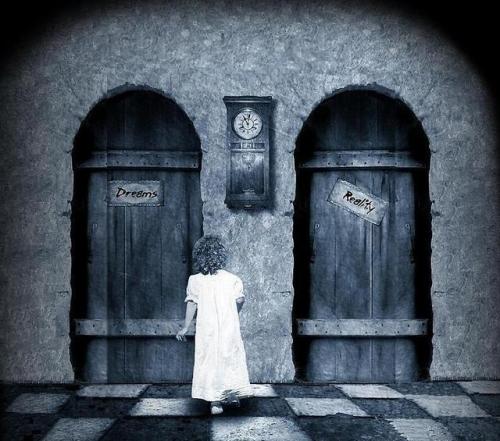
Are dreams connected with reality?
You do not see the reality every time. Your mind, dreams and reality are much inter-connected. Deja-Vu, Lucid dreams and Synchronicity are the set of experiences of mind over reality.
For more info: http://www.buzzle.com/editorials/1-22-2005-64587.asp

Common Dreams - Interpretation
 Failing a test
Being Chased

Dreaming of being chased can be a truly horrifying experience. Most often the chaser is a monster or some person that is frightening, and occasionally it may be an animal. You may be surprised to know that this isthe most commonly experienced nightmare theme. The meaning of these dreams is that someone, something (possibly something as obscure as an emotion) is making you feel threatened. One way to determine the root of the threat is to ask yourself who or what in yourreal life most closely resembles the “creature” or circumstance in your dream. It is also worth noting that sometimes this dream is a replay of an actual event in your life.
Teeth dreams
 Dreams about your teeth reflect your anxiety about your appearance and how others perceive you. Sadly, we live in a world where good looks are valued highly and your teeth play an important role in conveying that image. These dreams may stem from a fear of your sexual impotence or the consequences of getting old. Teeth are an important feature of our attractiveness and presentation to others. Everybody worries about how they appear to others. Caring about our appearance is natural and healthy. Another rationalization for these falling teeth dream may be rooted in your fear of being embarrassed or making a fool of yourself in some specific situation. These dreams are an over-exaggeration of your worries and anxiety.�
Teeth are used to bite, tear, chew and gnaw. In this regard, teeth represent power. And the loss of teeth in your dream may be from a sense of powerlessness. Are you lacking power in some current situation? Perhaps you are having difficulties expressing yourself or getting your point across. You feel frustrated when your voice is not being heard. You may be experiencing feelings of inferiority and a lack of self-confidence in some situation or relationship in your life. This dream is an indication that you need to be more assertive and believe in the value of your own opinion.
In the latest research, it has been shown that women in menopause have frequent dreams about teeth. This may be related to getting older and/or feeling unattractive and less feminine.
Naked dreams
 In this type of dream you are in a state of undress, partial undress, or inappropriate dress (for example wearing pajamas to work). Occasionally you are the witness of another person who is naked while you are clothed. This is often accompanied by feelings of embarrassment and shame, but occasionally with the feeling of pride or freedom. The meaning of this dream is thatyou are feeling exposed, awkward, or vulnerable, or you are afraid that you have revealed too much of yourself (such as a secret or a very personal feeling) in a real life situation. An interesting fact about this type of dream is that it occurs much more frequently in people who are involved in a wedding ceremony in theirreal life.
Falling dreams
 Flying dreams fall under a category of dreams known as lucid dreaming. Lucid dreams occur when you become aware that you are dreaming. Many dreamers describe the ability to fly in their dreams as an exhilarating, joyful, and liberating experience.
If you are flying with ease and enjoying the scene and landscape below, then it suggests that you are on top of a situation. You have risen above something. It may also mean that you have gained a different perspective on things. Flying dreams and the ability to control your flight is representative of your own personal sense of power.
Having difficulties staying in flight indicates a lack of power in controlling your own circumstances. You may be struggling to stay aloft and stay on course. Things like power lines, trees, or mountains may further obstruct your flight. These barriers represent a particular obstacle or person who is standing in your way in your waking life. You need to identify who or what is hindering you from moving forward. It may also be an indication of a lack of confidence. You need to believe in yourself and not be afraid.
If you are feeling fear when you are flying or that you feel that you are flying too high, then it suggests that you are afraid of challenges and of success. In reality, we cannot really fly, of course. Thus, such dreams may represent that which is beyond your physical limitations. In your mind, you can be anybody and do anything. Another way of interpreting flying dreams is that these dreams symbolize your strong mind and will. You feel undefeatable and nobody can tell you what you cannot do and accomplish. Undoubtedly these dreams leave you a great sense of freedom.
Faulty machinery
 In the faulty machinery dream you are trying to operate mechanical equipment which either fails to work, or fails to work in the way that you expect it to. The vast majority of these dreams involve a telephone – either trouble dialing, losing a connection, or dialing a wrong number. It can involve a lost Internet connection, or something manual like a jammed or broken machine. This dream often means that you feel you are losing touch with reality, or that a part of your body or mind is not functioning as it should. It can also occur when you are feeling anxious about making a connection with another person in real life.
Lost or trapped

Dreaming about being lost is very common and will usually occur when you are having conflict in deciding how to react in a situation in real life. In the dream you are trying to find your way out of an area – such as a forest, city streets, a large building, or other maze-like structure. Another way this dream plays out involves you being trapped, buried alive, caught in a web, or unable to move for some other reason. This is often accompanied by a feeling of terror. This dream usually means thatyou are trapped in real life – unable to make the right choice.
Ill or dying
 In this dream, you (or a loved one) are ill, injured, or dying. It is a moderately common dream and, not surprisingly, occurs often at the onset of an illness. Aside from becoming ill, this dream can mean thatyou are emotionally hurt or are afraid of becoming hurt. The dream may also be warning you of an upcoming physical risk to yourself or a loved one. When it is someone else in the dream that dies, it can mean that you feel that part of yourself (that you see represented by that person) is dead. It may also mean that you wish the person would go away, or that you fear losing them.
References:
http://www.dreammoods.com/commondreams/
http://listverse.com/2008/10/07/top-10-common-dreams-and-their-meanings/
http://www.analysedreams.co.uk/CommonDreamsCategory.html
Types of dreams
Daydream
Daydreaming is classified as a level of consciousness between sleep and wakefulness. Studies show that you have the tendency to daydream an average of 70-120 minutes a day. It occurs during waking hours when you let your imagination carry you away. As your mind begins to wander and your level of awareness decreases, you lose yourself in your imagined scenario and fantasy.
False Awakening Dreams
Have you ever thought you have waken up and gone about your daily morning routine: getting up, brushing your teeth, eating breakfast and going to work, only to wake up "again" and realize that what just happened is just a dream. That sensation is referred to as a false awakening.
Lucid Dream
Lucid dreams give you the ability to control your own dreams and steer them toward the direction you want. In the lucid state, you are more willing to confront threats and as a result, become more self confident. When you achieve lucidity, you can use it as a tool to improve your sports game, to rehearse for a speech, to fulfill your fantasies, or to solve a problem in your waking life. In fact, some athletes utilize their lucid dreams to practice their tennis serve, golf stroke or bat swing. Even in your day to day life, you can use lucid dreams to ask the boss for a raise, prepare for a first date, overcome phobias, get over writer's block, etc. Lucid dreams can help you visualize and rehearse an event in your mind before it actually occurs. It helps to overcome fears and anxieties. The application of lucid dreams is limited only to your imagination.
Because brain activity during the dream state is the same as during a real life event, what you "learn" or "practice" in your lucid dream state is similar to the training and preparation you do in the waking world. Your neuronal patterns are already being conditioned.
At least half of all adults have had one lucid dream in their lifetime. Many have reported having lucid dreams without even trying. Often flying is associated with lucid dreams. With practice, lucid dreaming can be learned and achieved at your will.
How to lucid dream
Dreams:
How To Lucid Dream
http://www.videojug.com/film/how-to-lucid-dream
Nightmare
A nightmare is a disturbing dream that causes the dreamer to wake up feeling anxious and frightened. Nightmares may be a response to real life trauma and situations. These type of nightmares fall under a special category called Post-traumatic stress nightmare (PSN). Nightmares may also occur because we have ignored or refused to accept a particular life situation.
Research shows that most people who have regular nightmares have had a family history of psychiatric problems, bad drug experiences, people who have contemplated suicide, and/or rocky relationships. Nightmares are an indication of a fear that needs to be acknowledged and confronted. It is a way for our subconscious to make up take notice. "Pay attention!"
Recurring Dreams
Most dreams contain messages that serve to teach you something about yourself. However, soon after you wake up to go about your daily routine, you tend to quickly forget what you dream about. The message in recurring dreams may be so important and/or powerful that it refuses to go away. The frequent repetition of such dreams forces you to pay attention and confront the dream. It is desperately trying to tell you something. Such dreams are often nightmarish or frightening in their content, which also helps you to take notice and pay attention to them.
Recurring dreams are quite common and are often triggered by a certain life situation or a problem that keeps coming back again and again. These dreams may recur daily, once a week, or once a month. Whatever the frequency, there is little variation in the dream content itself. Such dreams may be highlighting a personal weakness, fear, or your inability to cope with something in your life - past or present.
The repetitive patterns in your dream reveal some of the most valuable information about yourself. It may point to a conflict, situation or matter in your waking life that remains unresolved or unsettled. Some urgent underlying message in your unconscious is demanding to be understood.
Healing Dreams
Healing dreams serve as messages for the dreamer in regards to their health. The Ancient Greeks called these dreams "prodromic". Many dream experts believe that dreams can help in avoiding potential health problems and healing when you are ill or when you are grieving. Research shows that asthma and migraine sufferers have certain types of dreams before an attack. Your bodies are able to communicate to your mind through dreams. The dreams can "tell" you that something is not quite right with your bodies even before any physical symptoms show up. Dreams of this nature may be telling the dreamer that he or she needs to go to the dentist or doctor. If you can understand the language of dreams, your dreams will serve as an invaluable early warning system. They can help inform, advise and heal.
Prophetic Dreams
Prophetic dreams, also referred to as precognitive or psychic dreams, are dreams that seemingly foretell the future. One rational theory to explain this phenomenon is that your dreaming mind is able to piece together bits of information and observation that you may normally overlook or that you do not seriously consider. In other words, your unconscious mind knows what is coming before you consciously piece together the same information.
Epic Dreams
Epic dreams are so huge, so compelling, and so vivid that you cannot ignore them. The details of such dreams remain with you for years, as if your dreamt it last night. These dreams possess much beauty and contain many archetypal symbology.
Reference:
http://bahcecikdevekusu.com/dreamcenter/types.htm
http://www.dreammoods.com/dreaminformation/dreamtypes
Daydreaming is classified as a level of consciousness between sleep and wakefulness. Studies show that you have the tendency to daydream an average of 70-120 minutes a day. It occurs during waking hours when you let your imagination carry you away. As your mind begins to wander and your level of awareness decreases, you lose yourself in your imagined scenario and fantasy.
False Awakening Dreams
Have you ever thought you have waken up and gone about your daily morning routine: getting up, brushing your teeth, eating breakfast and going to work, only to wake up "again" and realize that what just happened is just a dream. That sensation is referred to as a false awakening.
Lucid Dream
Lucid dreams give you the ability to control your own dreams and steer them toward the direction you want. In the lucid state, you are more willing to confront threats and as a result, become more self confident. When you achieve lucidity, you can use it as a tool to improve your sports game, to rehearse for a speech, to fulfill your fantasies, or to solve a problem in your waking life. In fact, some athletes utilize their lucid dreams to practice their tennis serve, golf stroke or bat swing. Even in your day to day life, you can use lucid dreams to ask the boss for a raise, prepare for a first date, overcome phobias, get over writer's block, etc. Lucid dreams can help you visualize and rehearse an event in your mind before it actually occurs. It helps to overcome fears and anxieties. The application of lucid dreams is limited only to your imagination.
Because brain activity during the dream state is the same as during a real life event, what you "learn" or "practice" in your lucid dream state is similar to the training and preparation you do in the waking world. Your neuronal patterns are already being conditioned.
At least half of all adults have had one lucid dream in their lifetime. Many have reported having lucid dreams without even trying. Often flying is associated with lucid dreams. With practice, lucid dreaming can be learned and achieved at your will.
How to lucid dream
Dreams:
How To Lucid Dream
http://www.videojug.com/film/how-to-lucid-dream
Nightmare
A nightmare is a disturbing dream that causes the dreamer to wake up feeling anxious and frightened. Nightmares may be a response to real life trauma and situations. These type of nightmares fall under a special category called Post-traumatic stress nightmare (PSN). Nightmares may also occur because we have ignored or refused to accept a particular life situation.
Research shows that most people who have regular nightmares have had a family history of psychiatric problems, bad drug experiences, people who have contemplated suicide, and/or rocky relationships. Nightmares are an indication of a fear that needs to be acknowledged and confronted. It is a way for our subconscious to make up take notice. "Pay attention!"
Recurring Dreams
Most dreams contain messages that serve to teach you something about yourself. However, soon after you wake up to go about your daily routine, you tend to quickly forget what you dream about. The message in recurring dreams may be so important and/or powerful that it refuses to go away. The frequent repetition of such dreams forces you to pay attention and confront the dream. It is desperately trying to tell you something. Such dreams are often nightmarish or frightening in their content, which also helps you to take notice and pay attention to them.
Recurring dreams are quite common and are often triggered by a certain life situation or a problem that keeps coming back again and again. These dreams may recur daily, once a week, or once a month. Whatever the frequency, there is little variation in the dream content itself. Such dreams may be highlighting a personal weakness, fear, or your inability to cope with something in your life - past or present.
The repetitive patterns in your dream reveal some of the most valuable information about yourself. It may point to a conflict, situation or matter in your waking life that remains unresolved or unsettled. Some urgent underlying message in your unconscious is demanding to be understood.
Healing Dreams
Healing dreams serve as messages for the dreamer in regards to their health. The Ancient Greeks called these dreams "prodromic". Many dream experts believe that dreams can help in avoiding potential health problems and healing when you are ill or when you are grieving. Research shows that asthma and migraine sufferers have certain types of dreams before an attack. Your bodies are able to communicate to your mind through dreams. The dreams can "tell" you that something is not quite right with your bodies even before any physical symptoms show up. Dreams of this nature may be telling the dreamer that he or she needs to go to the dentist or doctor. If you can understand the language of dreams, your dreams will serve as an invaluable early warning system. They can help inform, advise and heal.
Prophetic Dreams
Prophetic dreams, also referred to as precognitive or psychic dreams, are dreams that seemingly foretell the future. One rational theory to explain this phenomenon is that your dreaming mind is able to piece together bits of information and observation that you may normally overlook or that you do not seriously consider. In other words, your unconscious mind knows what is coming before you consciously piece together the same information.
Epic Dreams
Epic dreams are so huge, so compelling, and so vivid that you cannot ignore them. The details of such dreams remain with you for years, as if your dreamt it last night. These dreams possess much beauty and contain many archetypal symbology.
Reference:
http://bahcecikdevekusu.com/dreamcenter/types.htm
http://www.dreammoods.com/dreaminformation/dreamtypes
The Importance Of Dreaming
1. To restore our body and mind.
2. To help with learning and memory.
3. To keep the brain at the right level of awareness and rest during sleep.
4. To allow the mind to handle disturbances in the night without waking up.
5. To keep our sense of self and wholeness through sleep.
6. To resolve conflicts that occur during the day.
7. To contextualize emotions from waking.
Sleep is necessary
Research has shown that people who are deprived from entering the dream phase of sleep, that is the REM stage, exhibit symptoms of irritability and even anxiety. Dreaming can be defined in various ways. For one, it is having thoughts, visions and other sensations that occupy the mind in sleep.
Reference: http://www.videojug.com/film/importance-of-dreaming
2. To help with learning and memory.
3. To keep the brain at the right level of awareness and rest during sleep.
4. To allow the mind to handle disturbances in the night without waking up.
5. To keep our sense of self and wholeness through sleep.
6. To resolve conflicts that occur during the day.
7. To contextualize emotions from waking.
Sleep is necessary
Research has shown that people who are deprived from entering the dream phase of sleep, that is the REM stage, exhibit symptoms of irritability and even anxiety. Dreaming can be defined in various ways. For one, it is having thoughts, visions and other sensations that occupy the mind in sleep.
Reference: http://www.videojug.com/film/importance-of-dreaming
Dream facts
- One-third of your lives is spent sleeping.
- In an average lifetime, you would have spent a total of about six years of it dreaming. That is more than 2,100 days spent in a different realm!
- Dreams have been here as long as mankind. Back in the Roman Era, striking and significant dreams were submitted to the Senate for analysis and interpretation.
- Everybody dreams. EVERYBODY! Simply because you do not remember your dream does not mean that you do not dream. In fact, you have several dreams during a normal night of sleep.
- Dreams are indispensable. A lack of dream activity can mean protein deficiency or a personality disorder.
- On average, you can dream anywhere from one or two hours every night. Moreover, you can have four to seven dreams in one night.
- Blind people do dream. Whether visual images appear in their dream depends on whether they were blind at birth or became blind later in life. But vision is not the only sense that constitutes a dream. Sounds, tactility, and smell become hypersensitive for the blind and their dreams are based on these senses.
- Five minutes after the end of the dream, half the content is forgotten. After ten minutes, 90% is lost.
- The word dream stems from the Middle English word, dreme which means "joy" and "music".
- Men tend to dream more about other men, while women dream equally about men and women.
- Studies have shown that your brain waves are more active when you are dreaming than when we are awake.
- Dreamers who are awakened right after REM sleep, are able to recall their dreams more vividly than those who slept through the night until morning.
- Physiologically speaking, researchers found that during dreaming REM sleep, males experience erections and females experience increased vaginal blood flow - no matter what the content of the dream. In fact, "wet dreams" may not necessarily coincide with overtly sexual dream content.
- People who are giving up smoking have longer and more intense dreams.
- Toddlers do not dream about themselves. They do not appear in their own dreams until the age of 3 or 4.
- If you are snoring, then you cannot be dreaming.
- Nightmares are common in children, typically beginning at around age 3 and occurring up to age 7-8.
- In a poll, 67% of Americans have experienced Deja Vu in their dreams, occurring more often in females than males.
- Around 3% of adults suffer from sleep apnea. This treatable condition leads to unexplained tiredness and inefficiency.
- Research has shown that the house is the most common setting for dreams.
- It is very normal for males to experience an erection during the REM stage of sleep, even when they are not dreaming anything of a sexual nature.
- The original meaning of the word "nightmare" was a female spirit who besets people at night while they sleep.
The Mechanics of Dreaming
While you are dreaming, your body undergoes noticeable changes. Your adrenaline rises, your blood pressure increases, and you heart beats faster. Given this hyperactivity, it should be no surprise how someone with a weak heart can die in their sleep. Their heart may not be able to withstand the strain and the erratic changes that their body is going through.
Dreaming takes place during REM, which stands for Rapid Eye Movement. It is thus called, because your eyes move rapidly back and forth under the eyelids. REM sleep takes place in the fourth stage of sleep and accounts for 15-20% of your sleep time. From the point you fall asleep, it takes 30 to 90 minutes before you start dreaming. You cycle through the 4 stages of sleep and may enter the REM stage 4 to 7 times in one night. During REM, your blood pressure and heart rate fluctuate and increase. It sounds like your body is going through a lot, but in fact, it is quite the contrary. During REM, your bodies are completely immobile and your muscles remain completely relaxed. You may shift in your bed throughout the night, but when in REM, you are completely still. This is commonly known as "REM Paralysis".
In REM sleep, the mind is as active as it is during waking. However, chemically it is different. REM is controlled by the excitability level of the cholinergic neruons. Noradrenaline and seratonin are missing in the brain when in the dream state. These chemicals allow the brain to carry out task, solve problems and remember things. This is a reason why you find it so hard to remember your dreams.
Reference: http://dreamology.wordpress.com/2009/01/29/the-sleep-cycle/
Dreaming takes place during REM, which stands for Rapid Eye Movement. It is thus called, because your eyes move rapidly back and forth under the eyelids. REM sleep takes place in the fourth stage of sleep and accounts for 15-20% of your sleep time. From the point you fall asleep, it takes 30 to 90 minutes before you start dreaming. You cycle through the 4 stages of sleep and may enter the REM stage 4 to 7 times in one night. During REM, your blood pressure and heart rate fluctuate and increase. It sounds like your body is going through a lot, but in fact, it is quite the contrary. During REM, your bodies are completely immobile and your muscles remain completely relaxed. You may shift in your bed throughout the night, but when in REM, you are completely still. This is commonly known as "REM Paralysis".
In REM sleep, the mind is as active as it is during waking. However, chemically it is different. REM is controlled by the excitability level of the cholinergic neruons. Noradrenaline and seratonin are missing in the brain when in the dream state. These chemicals allow the brain to carry out task, solve problems and remember things. This is a reason why you find it so hard to remember your dreams.
Reference: http://dreamology.wordpress.com/2009/01/29/the-sleep-cycle/
The sleep cycle
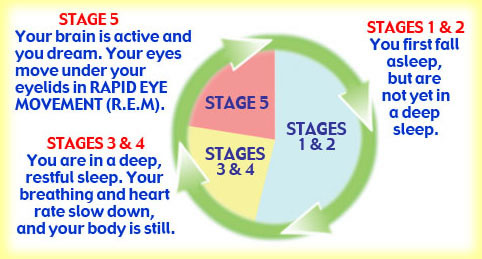
The sleep cycle is known to repeat itself four to five times during an average persons single nights sleep, but has been know to repeat itself up to seven times. You can certainly see how it is possible for one person to have several different dreams in one night.
Most people only ever really remember the last dream they have; the one that occurs closer to the morning, before they wake up. Just because you do not remember those earlier dreams in the sleep cycle does not mean they never happened, it is just a case that you don’t remember them.
1. Stage one is characterised by NREM or non rapid eye movement. It is fundamentally the stage in which you are entering light sleep. Your muscles become relaxed, your heart rate becomes slower and your body temperature drops.
2. Stage two is also characterised by the NREM, but there is a further drop in body temperature and the muscle relaxation deepens. This is when the body’s immune system begins it’s task of repairing the body. In this stage, you are completely asleep.
3. Stage three sees that you are still within the NREM stage, but the sleep you are experiencing is very deep, with your metabolic levels being very slow.
4. Stage four is the point when the most vivid dreams occur. You move into the REM stage, where your eyes are erratically moving. Your heart rate rises along with blood pressure and your breathing may become irregular as your brain activity increases. If you are to wake during this stage of the sleep cycle, then this is where you are most likely to remember your dreams accurately.
Reference: http://dreamology.wordpress.com/2009/01/29/the-sleep-cycle/
History of dreams

Dream interpretations dates back to 3000-4000 B.C. were they were documented in clay tablets. It is said that people in primal societies were unable to distinguish between the dream world and reality. They not only saw the dream world as an extension of reality, but the dream realm was a more powerful world.
Back in the Greek and Roman era, dream interpreters accompanied military leaders into battle. Dreams were extremely significant and often seen as messages from the gods. They were seen in a religious context and in Egypt, priests also acted as dream interpreters. The Egyptians recorded their dreams in hieroglyphics.
People with particular vivid and significant dreams were believed to be blessed and were considered special. People who had the power to interpret dreams were looked up to and seen as divinely gifted. In the bible, there are over seven hundred mentions of dreams. Tracing back to these ancient cultures, people had always had an inclination to interpret dreams.
Dreams were also seen as prophetic. People often looked to their dreams for signs of warning and advice. It was an oracle or omen from outside spirits, whether it was a message from a deity, from the dead or even the works of a demon. Dreams often dictated the actions of political and military leaders and aided in diagnosis for the medicine men. Dreams was a vital clue for healers in what was wrong with the dreamer and used them to make a diagnosis. People in ancient Greece and ancient China looked to their dreams for their next course of action.
Dreaming can be seen as an actual place that your spirit and soul leaves every night to go and visit. The Chinese believed that the soul leaves the body to go into this world. However, if they should be suddenly awakened, their soul may fail to return to the body. For this reason, some Chinese today, are wary of alarm clocks. Some Native American tribes and Mexican civilizations share this same notion of a distinct dream dimension. They believed that their ancestors lived in their dreams and take on non-human forms like plants. They see that dreams as a way of visiting and having contact with their ancestors.
Dreams also helped to point their mission or role in life. In the early 19th century, dreams were dismissed as stemming from anxiety, a household noise or even indigestion. Hence there was really no meaning to it. Later on in the 19th century, Sigmund Freud revived the importance of dreams and its significance and need for interpretation. He revolutionized the study of dreams.
Reference: http://bahcecikdevekusu.com/dreamcenter/history.htm
What causes dreams?
Dreams serve a purpose. They serve a specific function for our bodies and mind. While many dream analysts at the turn of the century focused on dream interpretations, dream experts of today focus on the scientific approach of what causes dreams. Dream Analyst and author Craig Webb says before we can look at what causes dreams, we must understand what dreams are to begin with. “Usually we define a dream as an experience remembered upon awakening that comes through nonphysical channels. Basically, it is an altered experience we have when we are sleeping and that we remember when we wake. However, there are lots of other variations on the definition. Some people define dreams as life goals and wishes for the future. This is another way we use the word.
According to the Freudian school, dreams are the result of subconscious thoughts and desires. The other extreme attributes dreams to random "noise" in the neurons without special meaning.
There is definitely value behind dreams nevertheless; nobody knows precisely, that causes them. The general theory - which they occur from subconscious thoughts from our daily thoughts and actions. It is true, things which we underline about the majority; apparently, take a priority in our dreams, though not always.
Reference: http://www.types-of-dreams.net/what-causes-dreams.html
According to the Freudian school, dreams are the result of subconscious thoughts and desires. The other extreme attributes dreams to random "noise" in the neurons without special meaning.
There is definitely value behind dreams nevertheless; nobody knows precisely, that causes them. The general theory - which they occur from subconscious thoughts from our daily thoughts and actions. It is true, things which we underline about the majority; apparently, take a priority in our dreams, though not always.
Reference: http://www.types-of-dreams.net/what-causes-dreams.html
Dream & Oneirology

What is dream?
- a succession of images, thoughts, or emotions passing through the mind during sleep.
- the sleeping state in which this occurs.
- an object seen in a dream.
Reference: http://dictionary.reference.com
Oneirology
The term oneirology refers to the systematic study of dreams within a scientific framework. As such it must be distinguished from oneiromancy which refers to using dreams for divinatory purposes. Both words come from the Greek oneiro - "dream".
The birth of oneirology as a discipline is often dated to the 1950s and the discovery by Kleitman and Aserinsky of the sleep cycle and the subsequent discovery of REM sleep. However the term itself goes back much further - Freud himself used it in his classic The Interpretation of Dreams.
Reference: http://www.here-be-dreams.com/dreams/oneirology.html
Subscribe to:
Posts (Atom)